
Tips for writing your birth story
Writing your birth story can be a meaningful way to process and document your unique experience of bringing your child into the world. Here are some steps to help you get started:
Set aside dedicated time to write: Find a quiet, comfortable space where you can focus on your writing without interruption. It's helpful to choose a time when you feel relaxed and mentally alert.
Gather your memories: Think back to the moments leading up to your labor, the labor process itself, and the first moments after your baby was born. Consider writing down any memories, thoughts, and feelings that come to mind.
Decide on a structure: You might want to organize your birth story chronologically, or you may choose to focus on specific aspects of your experience, such as your physical sensations, your emotional state, or the reactions of those around you.
Use sensory detail: Help your reader visualize your experience by incorporating sensory details. For example, describe the smell of the hospital, the feeling of the IV in your arm, or the sound of your baby's first cry.
Reflect on your experience: Consider the impact that your birth experience had on you and your family. Reflect on what you learned about yourself, your strengths, and your limitations. Share any insights that you gained from the experience.
Edit and refine: After you've written your birth story, take some time to review and edit it. Consider sharing it with a trusted friend or family member for feedback, and revise as needed.
Remember, your birth story is a deeply personal narrative that only you can tell. Write from your heart, and don't worry too much about getting it "right." The most important thing is to capture your experience in a way that feels authentic and meaningful to you.
But what if I can’t remember much from my birth?
It's common for some details of your birth to fade over time, especially if it has been a while since the experience. If you're struggling to remember details, don't worry - you can still write a meaningful birth story.
Here are some tips to help you write your birth story if you can't remember much:
Start with what you do remember: Even if you can't remember every detail of your birth, try to focus on the things that do stand out in your memory. This might include the feelings you had during labor, the support of your partner or other loved ones, or the moment you first held your baby.
Talk to others who were present: Consider talking to your partner, family members, or healthcare provider who were present during your birth. They may be able to fill in some details that you may have forgotten.
Look at photos or videos: If you have photos or videos of your birth, take some time to review them. This can help jog your memory and give you some concrete details to include in your story.
Focus on your emotions: Even if you can't remember specific details, you can still write about your emotions during your birth. Consider how you felt before, during, and after your birth, and try to describe those feelings as vividly as possible.
Write in your own voice: Remember that your birth story is unique to you, and there's no right or wrong way to write it. Write in a way that feels authentic to you, using your own voice and style.
In the end, the most important thing is to capture the essence of your birth experience in a way that feels true to you, even if you can't remember every detail.
If you’re currently preparing to give birth and would like help preserving your birth story through photography, reach out to check my calendar!

10 Questions to Ask a Birth Photographer
Interviewing anyone who will be part of your birth team may seem like a little extra work but you really want to ensure everyone in your birth space is the perfect fit for you. Here are 10 questions to ask a birth photographer during your initial interview. I have listed my own answers after each question as well.
What inspired you to become a birth photographer, and how long have you been photographing births?
I began my photo career with a degree in photojournalism from the University of Florida. From there I went on to become a staff photojournalist and later the photo editor for the Albuquerque Journal. I loved the fast paced world of journalism and the rush of adrenaline each unpredictable day brought. I photographed the highs and lows of my local community and was always eager to get to work on more long form storytelling projects. After the birth of my own son and the silly idea that I could possibly photograph my own birth (yes I still laugh about that) I knew birth photography was calling me. It was the perfect blend of my passion and skills while also providing a lasting visual legacy for a family. It took a few years for the stars to align but I started photographing births in 2021.Can you walk us through what to expect on the day of the birth and your role in it?
Once you know or suspect you are in labor I ask you to inform me and then keep me in the loop as things progress. Once you are en route to your birth center or already at the hospital and around 5-6 cm (active labor) you (or your support person) will contact me to let me know it’s time to join you. Once I’m with you I stay through your birth and then approximately 2 hours after birth.What is your photography style and how do you approach capturing a birth?
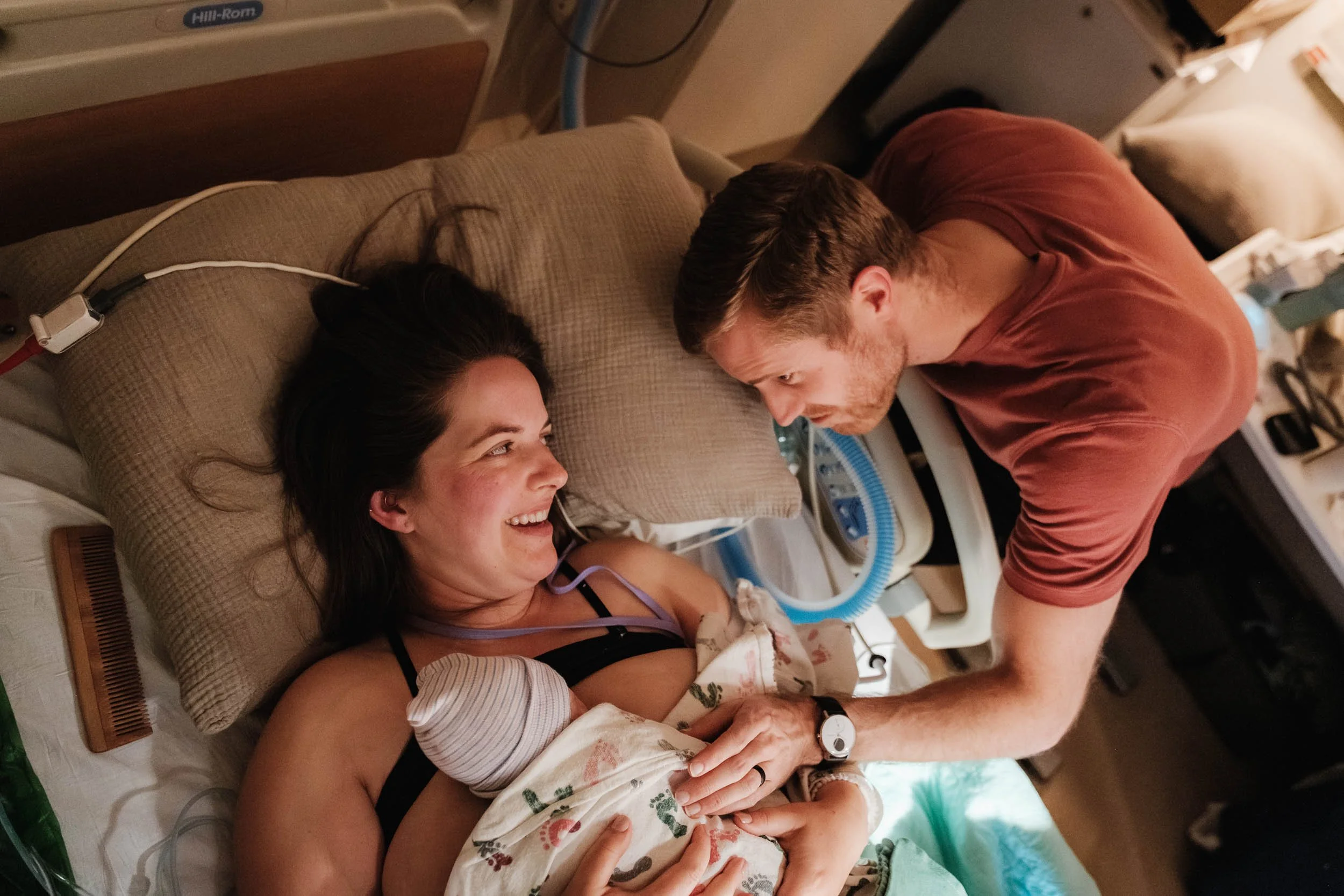
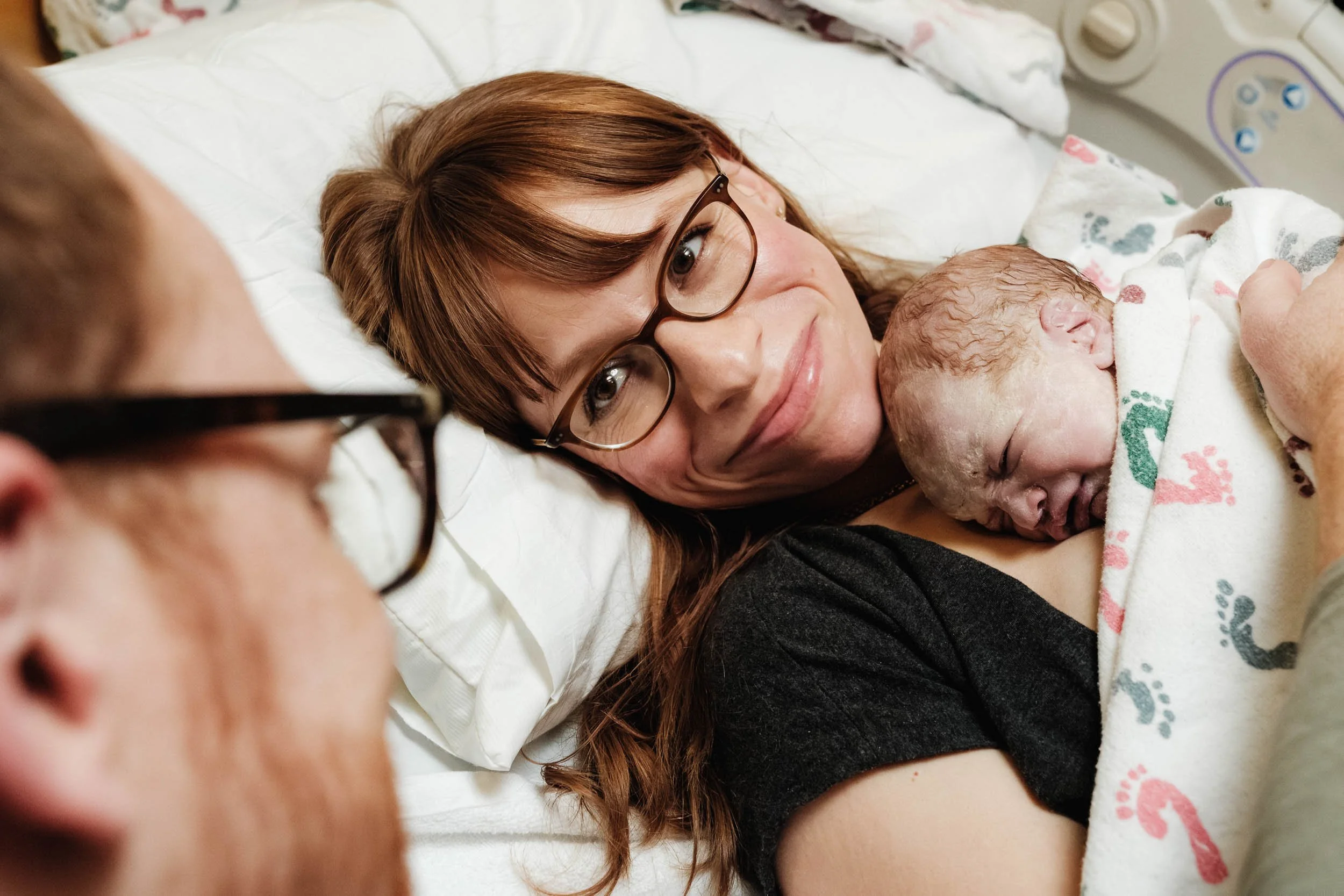
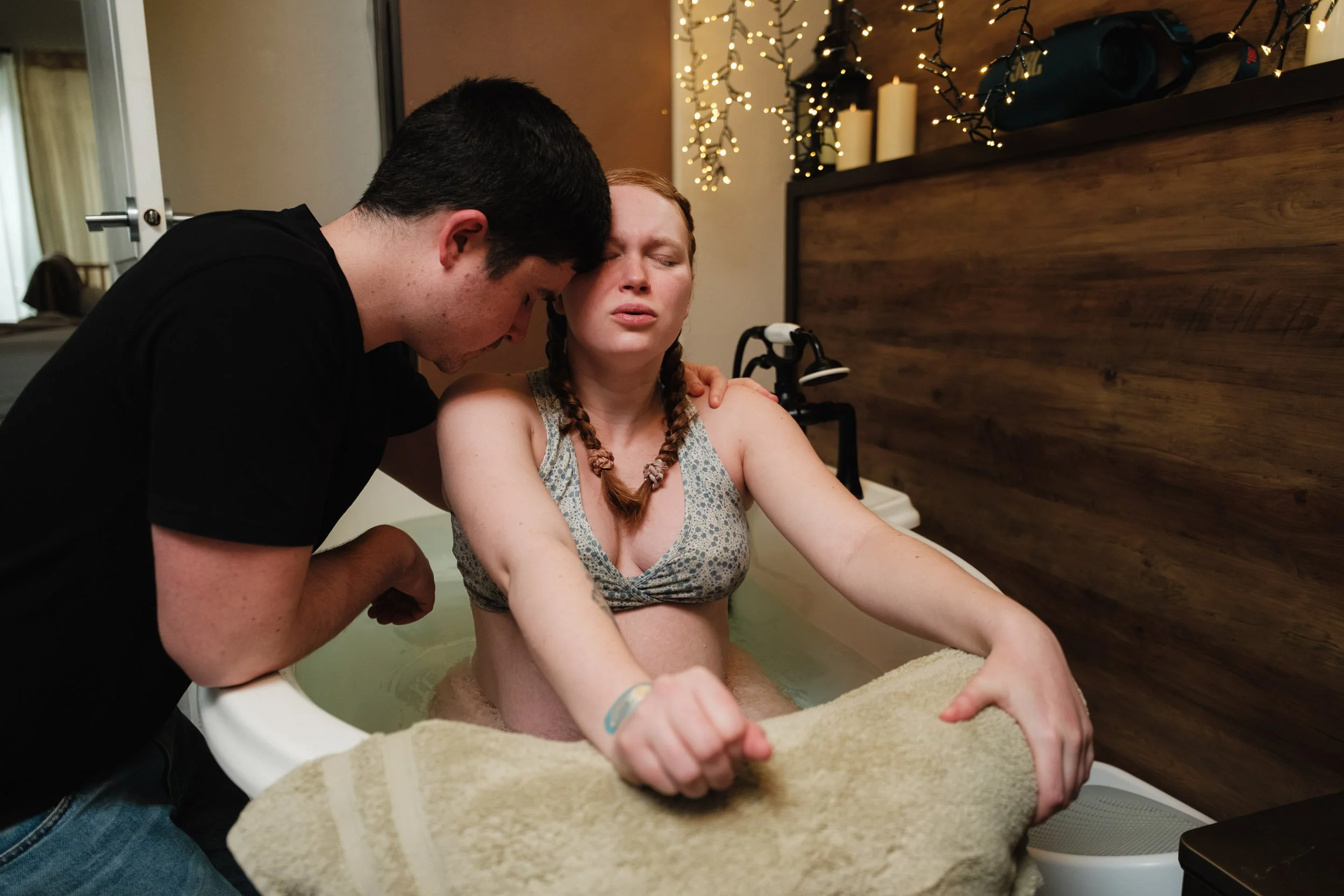
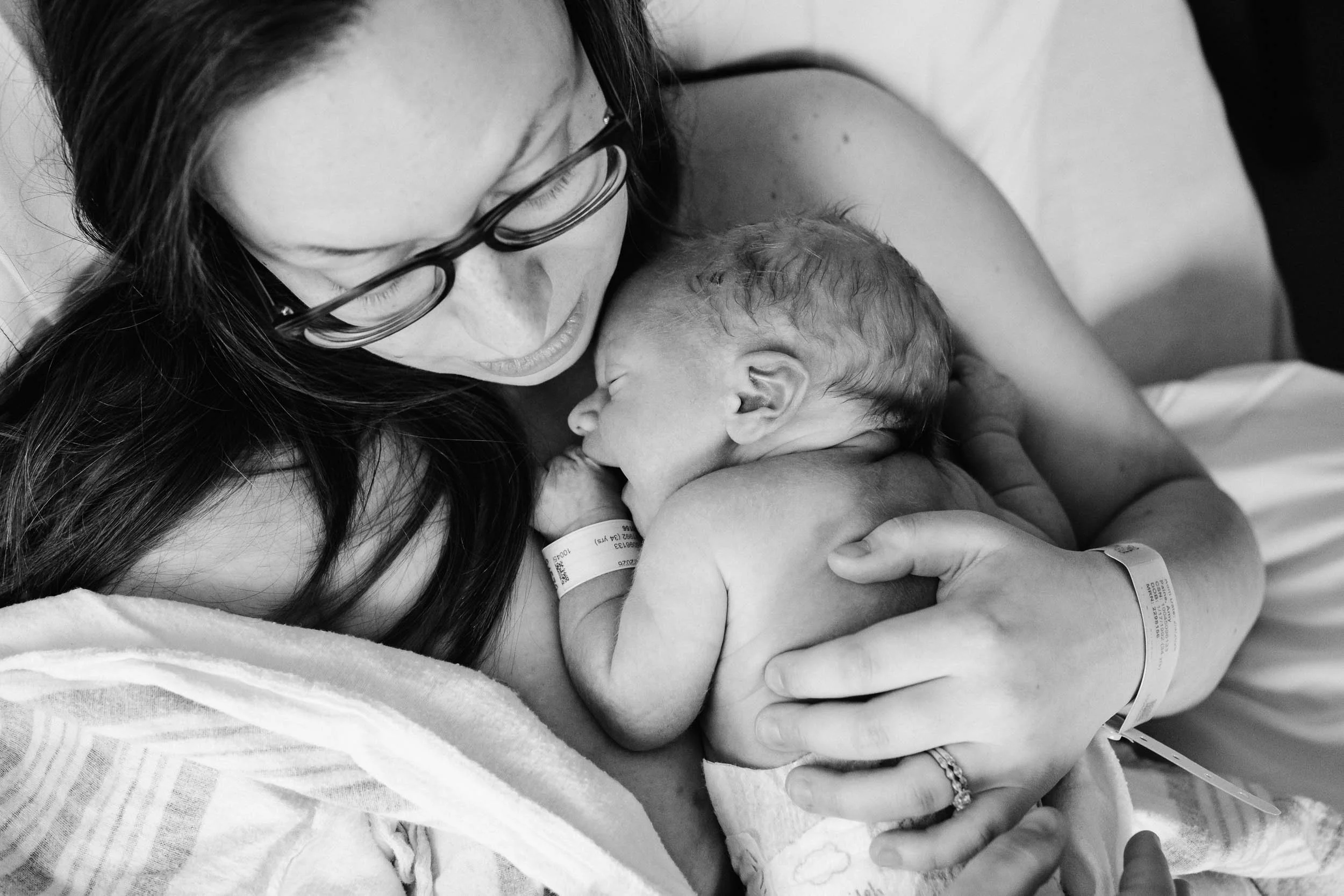
I’m a documentary photographer through and through. When it comes to photographing births, nothing is staged. I am in my element documenting the emotions and twist and turns of your labor and birth. I very much revert back to my photojournalist mode, almost a fly on the wall, but also with the knowledge of birth from both experience and my doula training leading me to know not only what to capture, but also how to tell the story of your birth.How do you manage your schedule and availability for births?
I only book 2 or 3 births a month. Even though I work with local backups, I really want to make sure I can make it to your birth. I’m lucky that my husband works from home and can take over everything our family needs when I run out the door to a birth. It really takes a team to support clients in a 24/7 capacity. Even my youngest hugs me on my way out the door (if it’s during the day) and wishes me (and my clients) a good birth.How do you work with the birth team (e.g. doctors, nurses, midwives) to ensure that you're not getting in the way or disrupting the birthing environment?
Experience is key here! There’s no way to learn this except with experience. I am constantly watching what’s happening in the room and who needs to move or stand in a particular place. Also, in the off chance of an emergency I always always default to ensuring providers have all the space they need and taking a step back to assess where a safe place would be for me to stay put out of the way while still capturing anything I may need to at the same time.What equipment do you use, and how do you ensure that your equipment is reliable and ready to use during a birth?
When I’m not in doula-mode, I use two mirrorless camera bodies and two lenses at the same time, one hanging from each shoulder. This provides the flexibility to change focal distance without having to fumble around changing lenses on one camera alone. My main camera body has my flash on it once the moment of birth is imminent to ensure I can capture clean lit photos of baby’s first moments. However, if a client has strong feelings about not wanting flash I always work with them and just leave my flash in my camera bag. After every session all my batteries are charged and camera bag repacked ASAP to ensure I can grab it at moment’s notice when it’s time for the next birth.What kind of backup plans do you have in case something goes wrong (e.g. camera malfunctions, unforeseen circumstances that prevent you from being there)?
Because I work with two camera bodies I always have backup gear on hand in case of a camera malfunction. I also always have 3 lenses with me as well. In the case of emergency on my side and not being able to make it to a birth the first thing I would do is get a back up photographer to photograph your birth and ensure the birth was documented.How do you handle photo editing and delivery of the final product? What kind of editing do you typically do, and how long does it take to receive the final product?
When I get home I download my files and back them up. From there I deliver a sneak peek (generally very PG) within 24 hours so that you can share photos with family and friends to announce the birth of your baby. After that begins the process of editing every photo by hand. I don’t do major retouching, my documentary style means I rely on my ability to capture moments and creative images in camera, and edit in a minimal but professional manner. I prefer to edit my images in a timeless manner and maintain true to life skin tones and color. It typically takes approximately 4 weeks for you to receive your final complete photo gallery.How do you handle confidentiality and privacy concerns? Do you have a contract or agreement that outlines how you will use the photos, who has access to them, and how you will protect the birthing person's privacy?
First of all, I never share any photos anywhere without consent. Every birth client fills out a model release that includes various options of photos you are ok with being shared and also the option of not allowing any photos to be shared. Beyond that, every private photo gallery is delivered password protected. In each gallery you also have the additional ability to hide photos in the gallery in case you’d like to share the rest of the gallery with family. After one year your gallery is taken down and no longer accessible to further protect your privacy. Coming from a journalism background, I understand oh-so-well how images can live on on the internet. I carefully consider every image I share on any digital platform.What is your fee structure, and what does it include? Do you offer any packages or add-ons, such as prints or albums?
My birth photography fee is structured into two parts, the first is a retainer you pay at the time of booking to ensure I have reserved your spot on my on-call calendar and the second is the remainder of the total fee that is due at your 37 week mark. My packages are all inclusive, meaning your files are always included. I also include in my base birth photography package an album of highlights from your birth story. I know that we all intend to make a book, or print some photos, after any photo session, but we rarely find the time to actually get it done. I take it off your future to-do list, design it for you, and include it in my fee because I personally believe your photos and your story are worth it.
Interested in having your own birth documented and live in the Seattle area? Reach out to check my availability.


Why you may consider hiring a doula
A doula is a trained professional who provides emotional, physical, and informational support to women and their families during pregnancy, childbirth, and the postpartum period. Here are some reasons why you might consider hiring a doula:
Continuous support: Doulas provide continuous support throughout the entire childbirth process, which can last for hours or even days. They can help you cope with the pain and discomfort of labor and provide comfort measures such as massage, breathing techniques, and positions to help you feel more comfortable.
Reduced interventions: Studies have shown that birthing people who use a doula during childbirth are less likely to have medical interventions such as epidurals, cesarean sections, and forceps or vacuum deliveries. This is because doulas can help birthing people feel more in control of their birth experience and can advocate for their wishes with medical staff.
Improved birth outcomes: Research suggests that birthing people who use a doula during childbirth have better birth outcomes, including shorter labors, fewer complications, and better Apgar scores for their babies.
Emotional support: Doulas can provide emotional support throughout the entire childbirth process. They can help you and your partner feel more confident and empowered during labor and delivery.
Postpartum support: Doulas can also provide support during the postpartum period, helping you adjust to life with a new baby, answering questions, and providing resources and referrals as needed.
Overall, hiring a doula can help you have a more positive birth experience and can provide valuable support during a time of significant physical and emotional transition.
Schedule a meet and greet with me if you are interested in doula support + birth photography and are expecting in the Seattle area.
How to prepare for a documentary newborn session
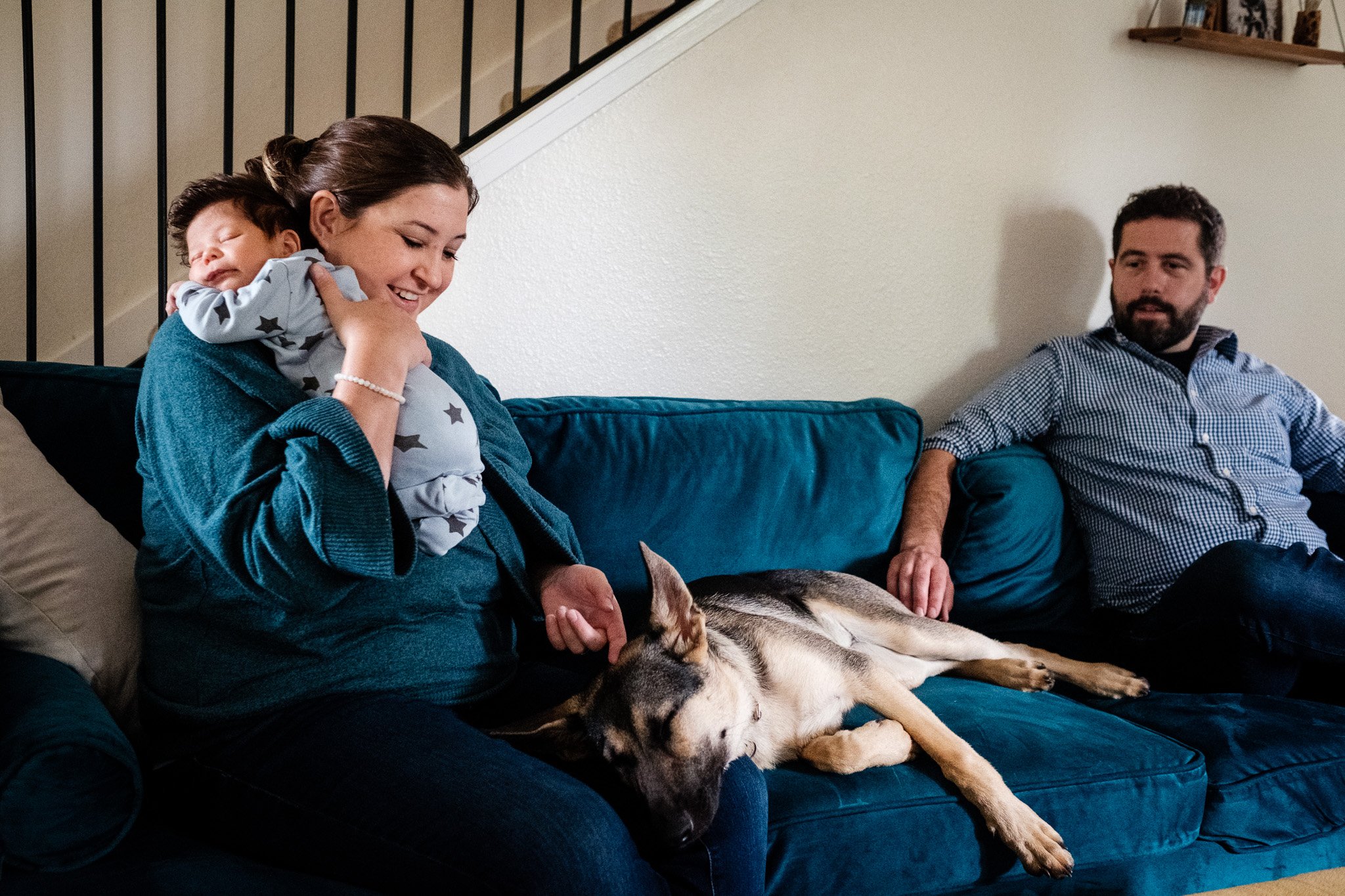
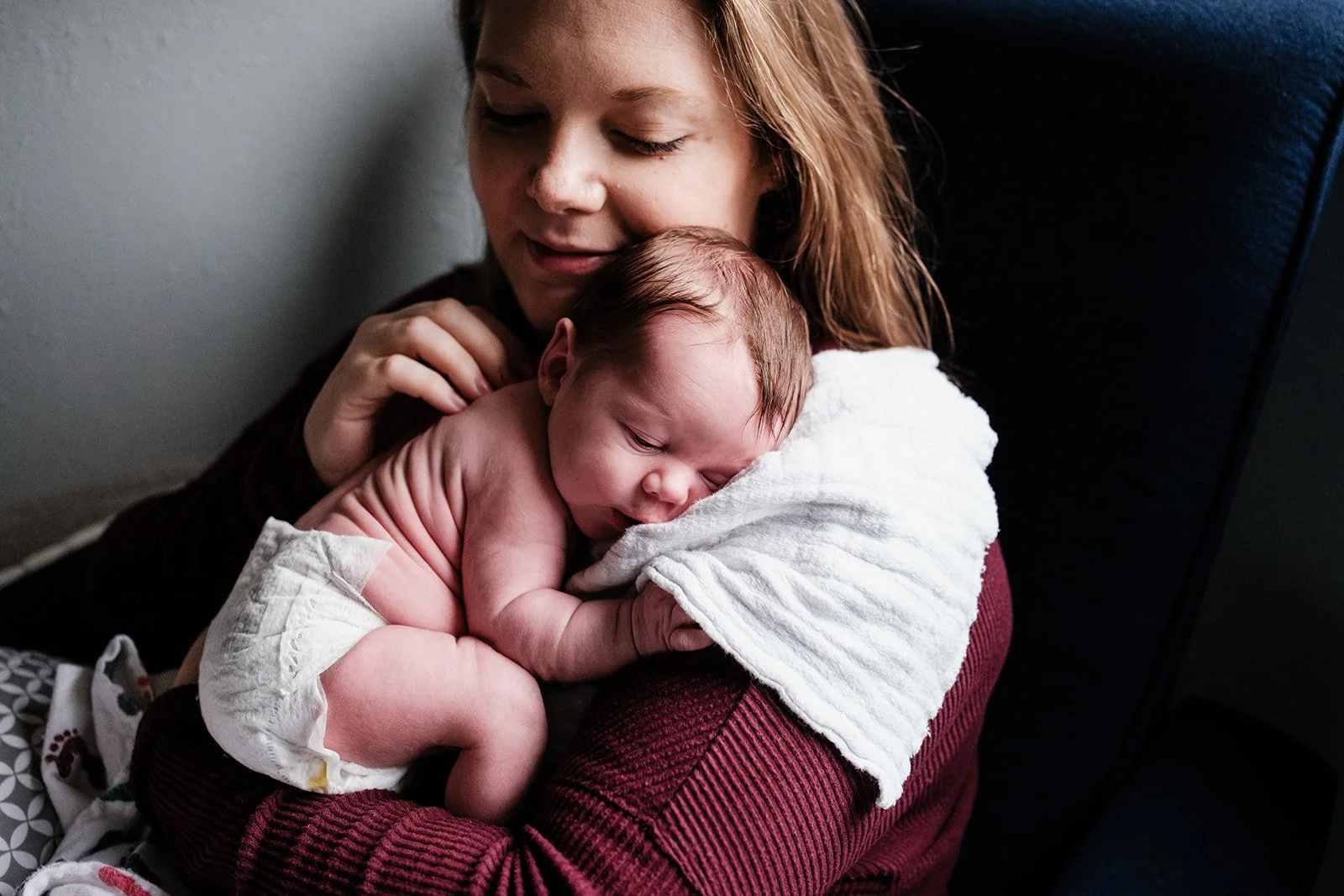
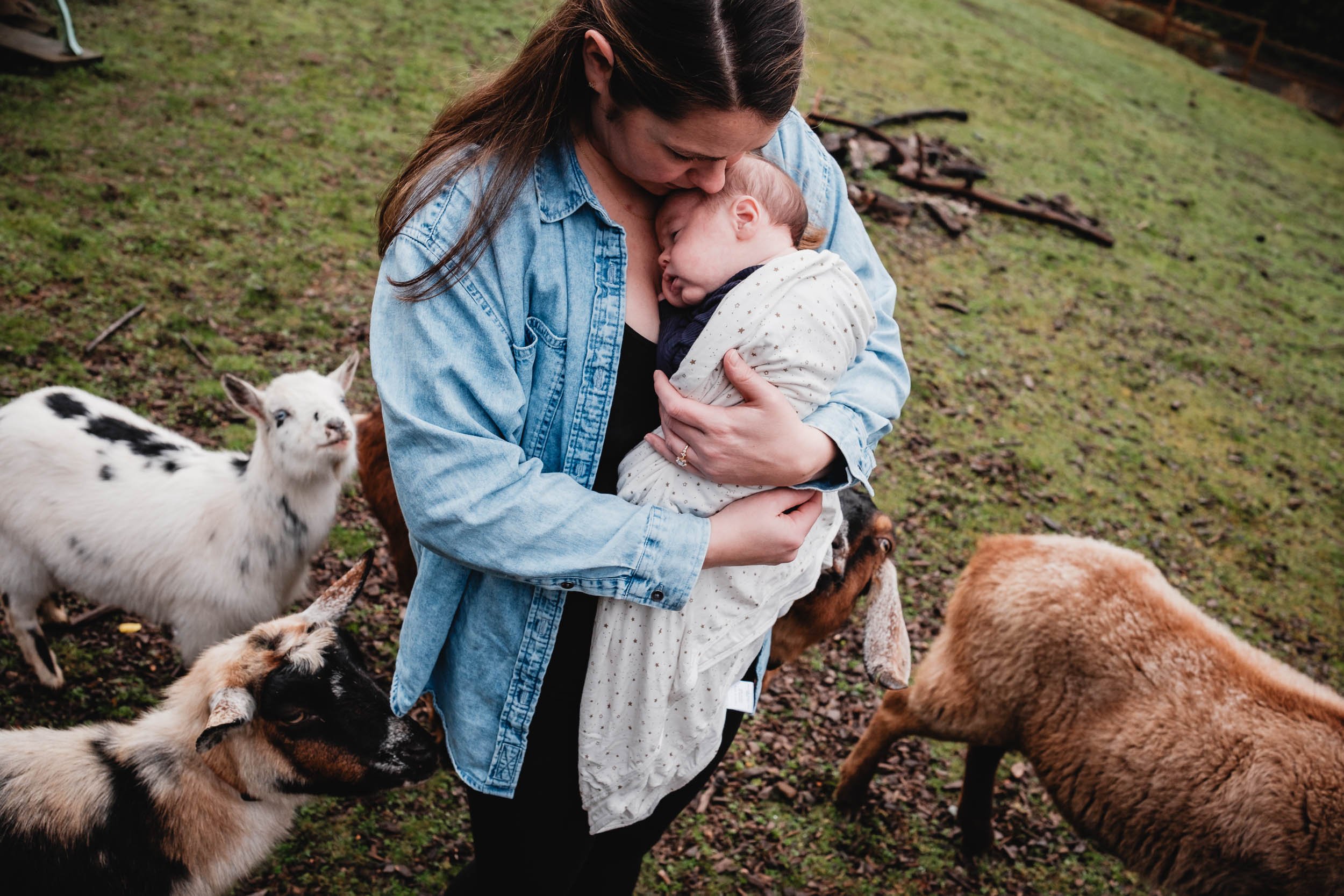
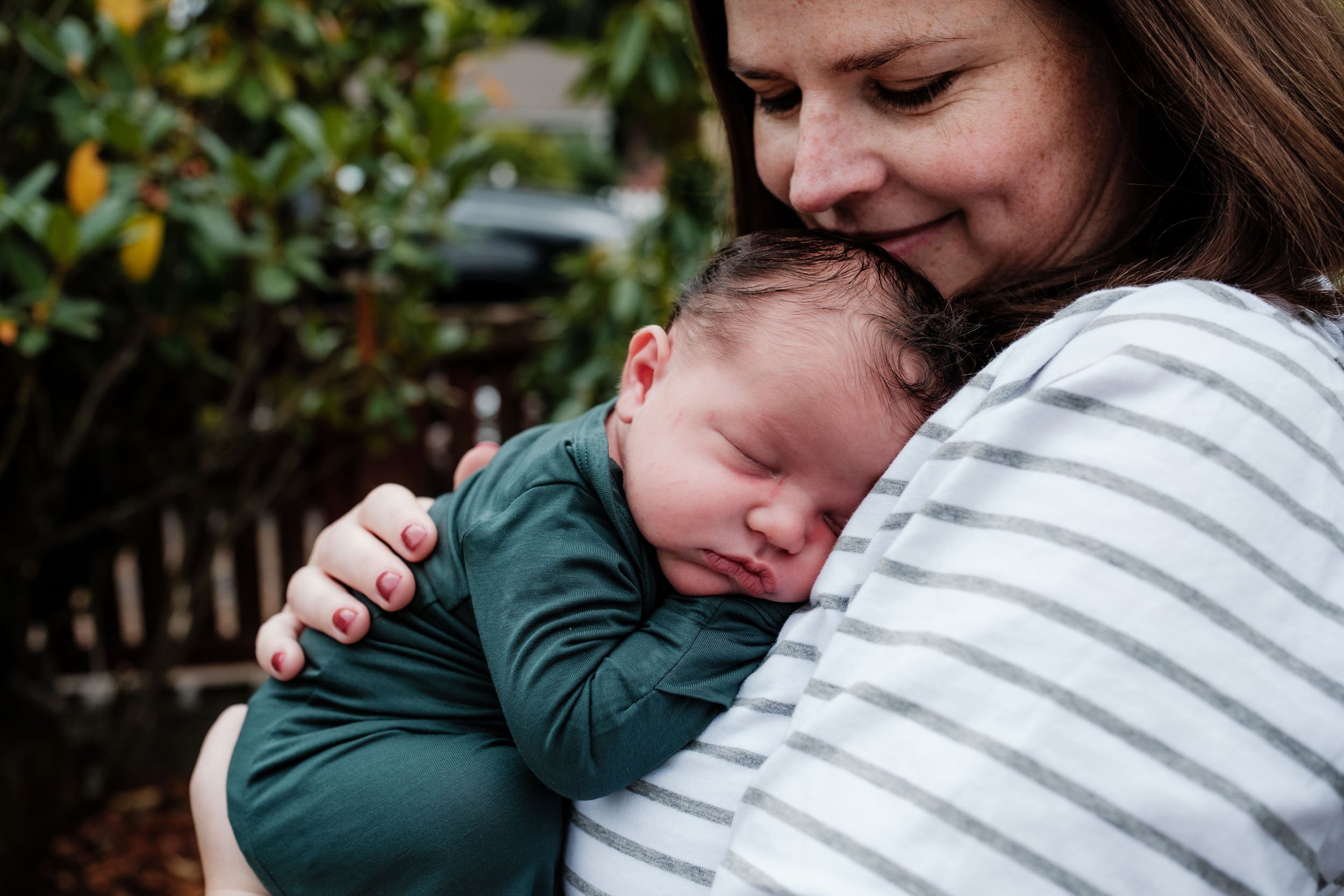
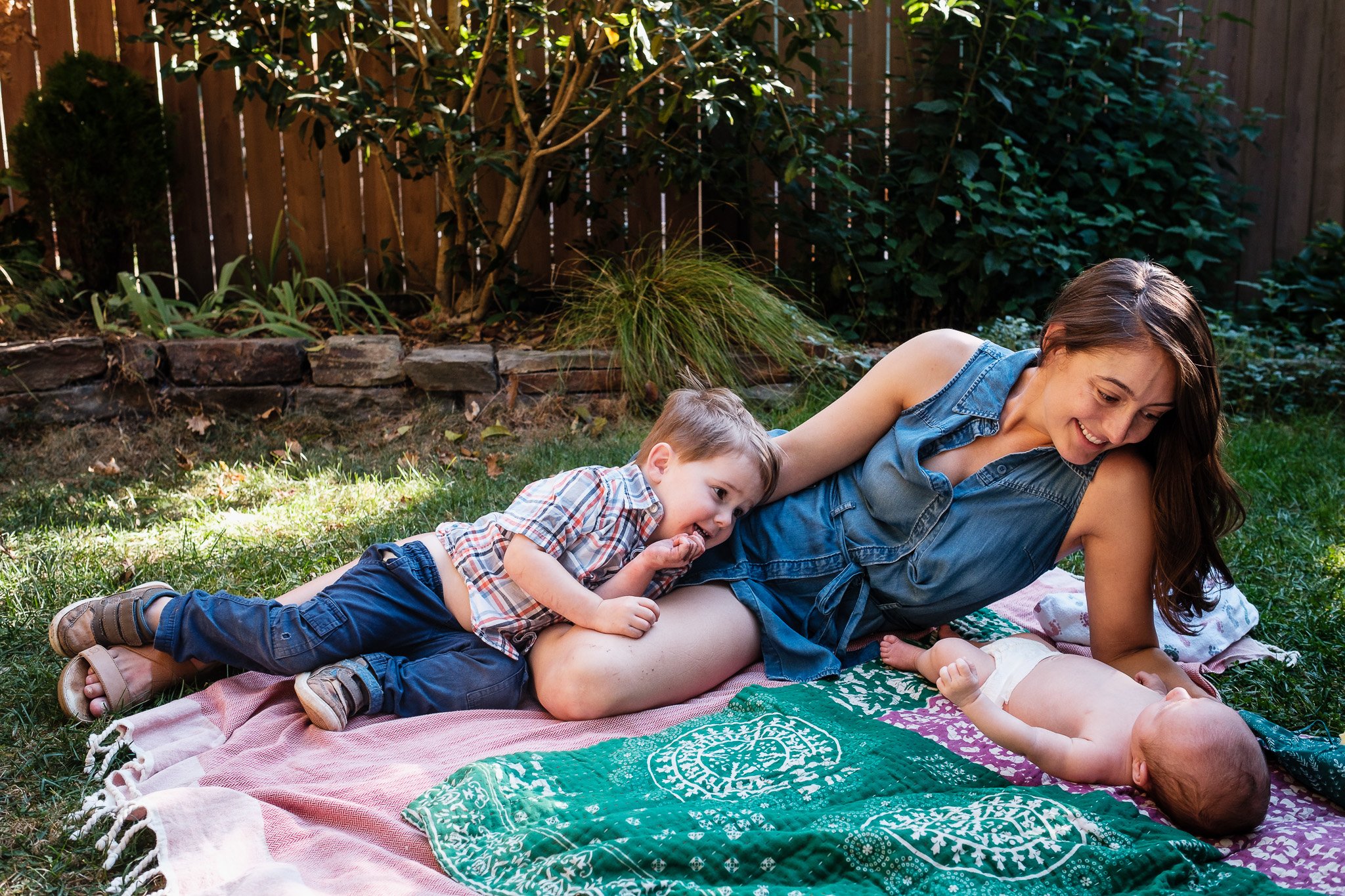
A documentary newborn session is different from a traditional newborn photoshoot, as it aims to capture truly candid and natural moments of your newborn's first few weeks of life. Here are some general tips to help you prepare for a documentary newborn session:
Find a photographer: Look for a photographer who specializes in documentary newborn photography, not lifestyle or studio photography. Check out their portfolio to ensure their style aligns with what you are looking for. - Congrats you already found me!
Schedule the session: As with traditional newborn sessions, it's best to schedule your documentary newborn session during your pregnancy to ensure availability. However, with a documentary session, the photographer will work around your baby's schedule, so there is more flexibility. - When you book during your pregnancy I use your week 41 date just as a placeholder on my calendar that almost certainly will be shifted once baby arrives. You can still book a newborn session after baby is born though!
Plan the session: Discuss with your photographer what you want to capture during the session. Make a list of important moments, such as feedings, diaper changes, and snuggles with family members. Decide if you want the session to take place in your home or another location. - I will send you a short questionnaire after booking that will ask you what important parts of newborn life you’re hoping to have documented.
Prepare your home (sorta): If you're having the session in your home, prepare the space by lightly decluttering and ensuring there is enough natural light. Your photographer will likely want to use areas with the most natural light. - I also invite you to just leave the mess! Or task your partner or a helpful family member to prep your space for you! You have a newborn and this is all about real life! Embrace it!
Keep your baby comfortable: Dress your baby in comfortable clothing and keep the room/home warm to ensure they are comfortable throughout the session. - Babies really are on their own schedule. Feeding, sleeping… it’s all going to happen while I’m there. No need to stress about those details ahead of time. Just listen to baby’s cues during your session as you would without me there.
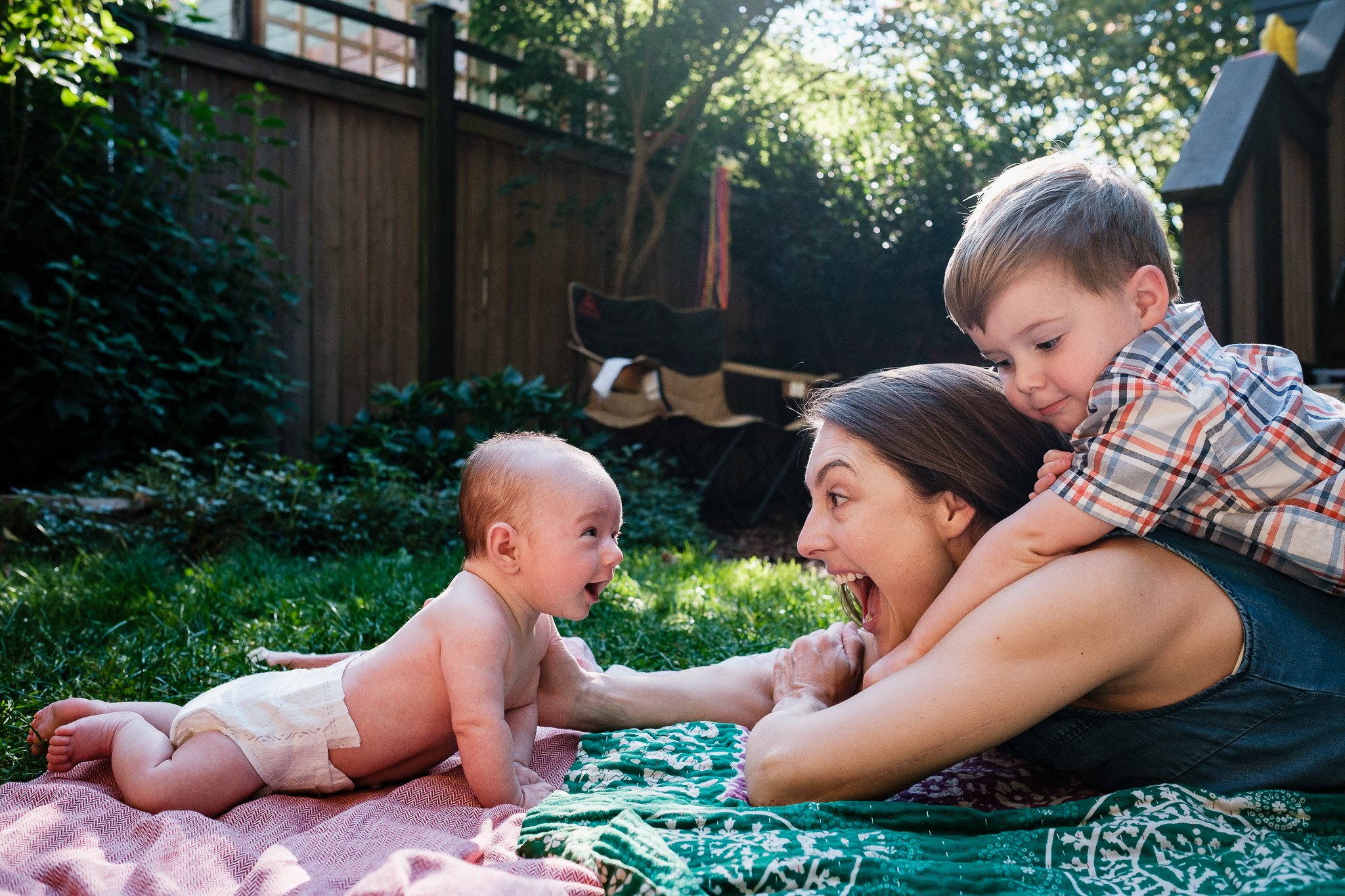
Embrace spontaneity: The essence of a documentary session lies in capturing genuine moments. Relax and be yourself, engaging with your baby and loved ones naturally. Allow your photographer to seize these fleeting yet precious instances. - The joy of documentary means you don’t have to worry about smiling at the camera. Just enjoy your baby and leave the rest to me! If an older kiddo wants to go outside and play while I’m there, lets do it! It’s all about going with the flow and trusting the process.
If your heart is saying this sounds like the perfect newborn session for you, let’s make it happen!

Documentary Family Photo Session Ideas - Seattle, Wa
With the documentary approach, it’s all about documenting your family’s real life, the little things that make up your day or week that may go by unnoticed or normally undocumented. But you still might be wondering, “What does that actually mean? What should we plan for and what will you photograph?” Below are just a few ideas of moments/events/things that could be part of your sessions.
While we never need to have a schedule for our time together, I hope this list helps you consider the possibilities of things that could be documented during your session! There’s really no limits to what I can capture for you. I become your family’s historian for the day and hopefully future as well.
Maternity/Before Baby:
Shopping for baby
Decorating/setting up baby’s nursery
Baby shower
Daily walk
Cooking with family
Hanging out with older kids at home or at the park
Your normal Saturday routine
Early prepping of food for your family postpartum
Check up with your midwife (out of hospital)
Building any new baby furniture (crib, rocker, changing table)
Newborn/Babies:
First bath at home/general bath time
Skin to skin time
Tummy time
Trying first solids
Nursing
Pumping
Meeting/Snuggling with siblings
Meeting/Snuggling with grandparents
Walks around the neighborhood
Story time at the library
Snuggles with mom and dad
Napping with mom and dad
Playing with extended family (aunts/uncles)
Morning/Bedtime routine
First Birthday
Family:
Breakfast
Waking up
Morning routine
Lunch
Dinner time
Bath time
Brushing teeth
Bedtime books
Family game time
Playing together in the yard/outside
Trip to a playground
Trip to a museum
Trip to the farmers market
Trip to the library
Trip to the grocery store
Trip to the aquarium
Practicing musical instruments
Playing sports outside together
Making cookies/treats in the kitchen
Cooking a meal together
Grandparents visiting
Playing with the family pet/walking the dog
First day with new family pet
Yard work/raking leaves/planting trees
Gardening
Blowing bubbles outside
Building legos together
Building a fort together
Salmon watching
Mushroom hunting
Exploring the beaches and natural wonders of the puget sound
Holiday family traditions
Birthday/Family milestone
Making crafts together
Moving into a new home
Backyard camping
Backyard fire and s’mores
Backyard movie time